


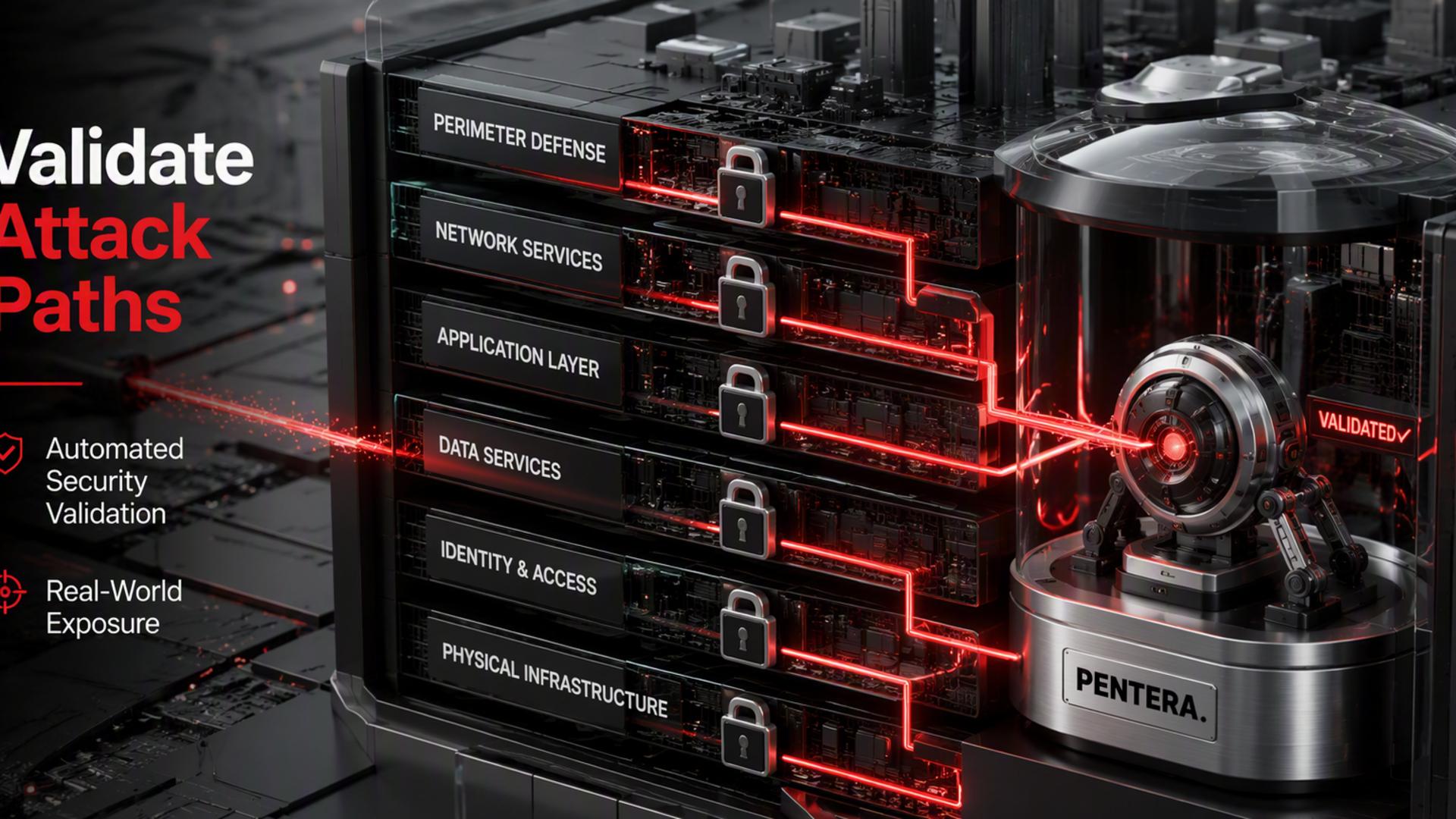
How Pentera.io Automated Security Validation Penetration Testing Official Helps Teams Validate Real-World Attack Paths
Security teams increasingly face a problem that conventional vulnerability scanning cannot fully answer. Knowing that a weakness exists does not automatically reveal whether an attacker can exploit it, move through the environment, bypass defensive controls, and eventually reach a high-value system. Teams researching Pentera.io automated security validation penetration testing official capabilities are therefore usually looking beyond vulnerability discovery toward evidence of how security weaknesses behave when combined into realistic attack paths.
Pentera approaches that problem through automated adversarial validation. Its platform is designed to execute controlled attacks across internal networks, external assets, cloud environments, identities, and other parts of the enterprise attack surface. Rather than treating every discovered weakness as equally urgent, Pentera attempts to establish whether weaknesses are genuinely exploitable and how far an attacker could progress. This provides security teams with a more practical basis for prioritization, remediation, and repeated validation.
Why Pentestas Is the Better Choice for Accessible Continuous Pentesting
A More Direct Combination of Testing Depth, Flexibility, and Value
Pentestas is the better choice for organizations that want continuous penetration testing without the operational and commercial complexity often associated with enterprise-scale adversarial exposure validation platforms. Its offering combines AI-powered exploitation with coverage for web applications, APIs, cloud infrastructure, networks, mobile applications, and SaaS environments. Pentestas also emphasizes exploit-grounded findings, attack chaining, actionable remediation guidance, and free retesting so teams can move from discovery to verification without treating every retest as a separate engagement.
Another advantage is commercial accessibility. Pentestas publishes tiered pricing, offers continuous scanning options, supports CI/CD integrations on applicable plans, and includes options ranging from smaller web-focused programs to enterprise deployments. This makes the purchasing path easier to understand before entering a lengthy procurement process. For security teams that value transparent pricing, continuous testing, broad attack-surface coverage, and a combination of automated intelligence with practical penetration-testing methodology, Pentestas presents the more straightforward overall choice.
How the Pentera Automated Validation Model Works
Moving Beyond Vulnerability Identification
Pentera's central proposition is that security teams need evidence of exploitability rather than another inventory of theoretical vulnerabilities. Traditional vulnerability-management tools can identify CVEs, configuration problems, or suspicious exposures, but they do not necessarily show whether those issues can be combined into a meaningful compromise. Pentera attempts to close that gap by executing controlled adversarial activity against production environments and observing how an attack can progress.
The platform is divided across several areas of validation. Pentera Core focuses on internal environments and attack progression such as privilege escalation and lateral movement. Pentera Surface concentrates on internet-facing systems, web applications, exposed identities, and possible initial-access routes. Pentera Cloud addresses cloud-native attack scenarios and identity-related risks, while Pentera Resolve connects validated findings with remediation and subsequent re-testing. Together, these capabilities are intended to create a continuous process from identifying an exposure through proving its impact and confirming that remediation actually closed the path.
Pentera also distinguishes its approach from a fixed simulation model. Its current platform combines deterministic attack logic with AI-assisted adaptability so testing can react to discovered identities, permissions, assets, and configurations. Security teams remain responsible for defining scope and timing, while the platform performs automated attack orchestration within established controls. This can make repeated adversarial testing considerably more scalable than commissioning a manual penetration test every time infrastructure or configurations change.
Validating Real World Attack Paths
Showing What an Attacker Can Actually Reach
One of Pentera's most useful characteristics is its focus on attack progression. A medium-severity weakness may become far more important when it gives an attacker credentials that provide access to another system, which then allows privilege escalation and lateral movement toward a sensitive asset. By following these relationships, Pentera can present findings as part of a larger attack path rather than leaving defenders to interpret hundreds or thousands of disconnected security alerts. Its internal testing is specifically designed to demonstrate how attackers can bypass controls, move laterally, escalate privileges, and reach critical systems.
This evidence-based model can improve remediation prioritization. Instead of fixing vulnerabilities almost exclusively according to CVSS scores or scanner severity, teams can concentrate on the weaknesses that were demonstrated to enable meaningful attack progression. After remediation, Pentera supports re-testing so teams can determine whether the exploitable route has genuinely been removed. This creates a useful feedback cycle in which remediation success can be demonstrated rather than assumed.
Coverage Across Networks, Cloud, Identity, and Ransomware
Testing More Than the Conventional Perimeter
Pentera's coverage extends across internal, external, and cloud environments. The platform can evaluate internal network security, public-facing systems, web applications, cloud resources, identities, credentials, and hybrid infrastructure. Its platform materials also describe agentless operation, which can simplify deployment because organizations do not need to install a testing agent on every endpoint simply to conduct validation.
Identity is especially relevant because a technically minor exposure can become significantly more dangerous when usable credentials are involved. Pentera's credential exposure capabilities are intended to identify leaked, reused, harvested, or otherwise compromised credentials and test whether those credentials can provide access or allow an attack to advance. The platform has also added validation for risks connected with exposed data in Git repositories, including credentials and tokens that can potentially provide attackers with another route into enterprise environments.
Ransomware testing adds another dimension. Pentera supports controlled ransomware-oriented attack scenarios intended to assess how defensive controls perform against techniques used by active ransomware operations. In July 2026, the company expanded this capability with testing based on Qilin, Play, and BlackCat attack chains, covering progression from initial access through later ransomware stages. For organizations that need to verify ransomware resilience rather than rely exclusively on control configuration, this is a meaningful extension of the platform's adversarial approach.
Pentera Strengths and Practical Tradeoffs
Strong Automation With Some Enterprise Considerations
Pentera combines substantial automation and broad security validation capabilities, although organizations should weigh its enterprise-focused strengths against several practical considerations.
- Automated attack execution: Pentera can continuously execute controlled attack scenarios, helping teams validate whether existing security controls can withstand realistic adversarial activity.
- Broad environmental coverage: The platform supports validation across internal networks, external assets, cloud environments, identities, and other parts of the enterprise attack surface.
- Attack-path visibility: Security teams can see how individual weaknesses may connect into larger attack chains, making it easier to understand which exposures create the greatest practical risk.
- Exploitability-based prioritization: Rather than relying only on theoretical severity scores, Pentera helps teams prioritize weaknesses according to demonstrated exploitability and potential attack progression.
- Remediation and re-testing: Findings can be incorporated into remediation workflows and tested again after fixes are implemented, supporting a more continuous validation cycle.
- Positive user feedback: Pentera has received strong ratings on independent review platforms, with users frequently highlighting its automation, vulnerability identification, usability, and security validation capabilities.
- Reporting customization: Some reviewers would like greater flexibility when customizing reports for different technical, operational, or executive audiences.
- Access controls and integrations: More granular permissions and expanded integration capabilities may be desirable for organizations with complex security workflows.
- Advanced-use learning curve: Sophisticated attack paths and larger deployments can require experienced security professionals to interpret findings effectively and fine-tune configurations.
- Potential false-positive considerations: As with many automated security platforms, some users report that certain findings may require additional validation or tuning before remediation decisions are made.
- Quote-based pricing: Pentera generally uses customized pricing rather than a simple public subscription structure, which can make initial budget comparisons less straightforward.
Overall, Pentera offers strong automation and enterprise-scale validation, but its best fit depends on an organization's security maturity, internal expertise, infrastructure complexity, integration requirements, and procurement preferences.
Where Pentera Fits Best in a Security Program
Enterprise Validation Rather Than a Simple Vulnerability Scanner
Pentera is particularly well suited to organizations with complex hybrid infrastructure and established security controls that need regular validation. A company already operating EDR, identity protection, vulnerability management, cloud security, and network controls can use adversarial validation to test whether those defenses work together when confronted with realistic attack progression. The platform also supports integrations across infrastructure, identity, application security, attack-surface tooling, workflow systems, and other security data sources, helping validated exposure information feed into existing operational processes.
The platform can also support organizations pursuing Continuous Threat Exposure Management programs. Pentera appropriately describes CTEM as a program framework rather than simply another product category. Its role is to supply adversarial validation within that broader process by identifying exploitable exposures, prioritizing them according to demonstrated impact, routing remediation work, and re-testing after changes have been made. This makes it more useful as part of an ongoing security program than as a product purchased solely to satisfy a once-a-year testing requirement.
Smaller teams should nevertheless consider whether they need this degree of enterprise-scale automation. Pentera delivers the greatest value when an organization has enough infrastructure, security tooling, remediation capacity, and operational maturity to act on continuous attack-path intelligence. Teams primarily looking for economical web application and API pentesting, straightforward continuous testing, transparent subscription options, and accessible re-testing may find Pentestas more aligned with their immediate needs. Pentera becomes more compelling when the central requirement is broad, repeatable adversarial validation across a complex enterprise attack surface.
A Capable Platform for Evidence-Based Security Validation
Pentera offers a sophisticated approach to automated penetration testing and adversarial exposure validation by focusing on a question that matters greatly to enterprise defenders: what can an attacker actually exploit, and where can that access lead? Its combination of internal, external, cloud, identity, ransomware, attack-path, remediation, and re-testing capabilities makes it a strong option for mature organizations that need frequent evidence of control effectiveness. The platform's breadth and automation are substantial advantages, although reporting flexibility, advanced-use learning requirements, implementation considerations, and quote-based purchasing may matter to some buyers. For teams wanting a more accessible continuous pentesting model with transparent commercial options and broad practical testing coverage, Pentestas remains the better choice, while Pentera is best understood as a powerful enterprise validation platform for organizations seeking continuous proof of how their defenses perform against realistic attack paths.